Skip to content

Published September 8, 2026

What public transport actually costs in the Netherlands in 2026

Dutch public transport deserves its reputation. Trains run often, they mostly run on time, and you can live here comfortably without owning a car. What trips people up is not the network, it is the paying. Two things changed recently: the card almost every guide tells you to buy is being retired, and fares have moved again. Both matter more than usual if you are house hunting, because the gap between what you save on rent in a smaller city and what you spend getting out of it is often smaller than people assume.

The card in your wallet is being replaced

For almost fifteen years the OV-chipkaart was the answer to every payment question. It is now being phased out and replaced by the OV-pas. The new card looks much the same, but your details no longer sit on the plastic. They live in an online account instead, which is why you can manage a season ticket from your phone rather than a machine at the station. A version you can add to your phone's wallet is coming later.

An OV-pas costs 6 euros and you order it through OVpay. If you already hold an NS season ticket, do nothing for now: you keep travelling on your OV-chipkaart until NS contacts you about the switch, and in most cases the new pass is free when it arrives. There is one gap worth knowing about, because it catches people out. Season tickets cannot yet be loaded onto an OV-pas at all. If your discount lives on an OV-chipkaart today, keep using that card until NS moves it across.

Three ways to pay, and only one of them carries a discount

You can tap in with a contactless bank card or phone, with an OV-pas running on a balance, or with an OV-chipkaart. All three work on trains, metros, trams and buses across the country, and all three need you to check in at the start and check out at the end. Miss the check-out and you are charged a penalty fare rather than the real one.

The difference is money. Pay with a bank card or a bare OV-pas and you travel second class at the full rate, every time, with no discount applied. Discounts and season tickets only attach to a card that is registered to you. So contactless is genuinely the easiest way to get moving in your first week, and it is the wrong way to commute for a year. Anyone travelling the same route five days a week is overpaying from about the second month onwards.

One more quirk of the new system: with an OV-pas you no longer see your balance or the fare on the gate when you tap out. You check those in the NS app or through your OVpay account.

What a season ticket costs in 2026

Here is where the real savings are, and the names are less confusing than they look. NS Flex Basis is free, with a one-off 10 euros, and simply lets you travel on account and pay afterwards. Dal Voordeel costs 6.35 euros a month and gives you a discount outside peak hours, which is the single easiest win if your hours are at all flexible. There is also an annual version at 76.20 euros if you would rather pay once.

Above that the products get bigger. Weekend Vrij is 39.50 euros a month for unlimited weekend travel in second class. Dal Vrij, unlimited off-peak travel, runs to 127.95 euros a month. Altijd Vrij, unlimited everything at any hour, is 399.95 euros a month, which tells you something about how Dutch employers usually handle commuting: most reimburse it. Ask about the travel allowance before you sign a contract, because it changes which of these makes sense.

If you commute a fixed route, Traject Vrij is the one to price up. It covers unlimited travel between two stations and the rate depends on the route, so it has no list price. Get a quote for your actual journey before you settle on anything else.

The bits of the network people get wrong

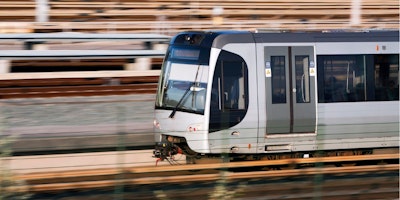
Trains between cities are run mostly by NS, with regional lines operated by companies like Arriva, Connexxion and Keolis. Trams serve the four biggest cities. Metros exist in only two places, Amsterdam and Rotterdam, which surprises people who assume Utrecht or The Hague must have one too. They do not, and they do not really need one, because the tram and train frequencies do the same job.

Ferries are the part nobody mentions. In Amsterdam the ones across the IJ are free and take bikes, which quietly makes Amsterdam Noord far better connected than the map suggests. Rotterdam, Zeeland and Friesland have their own routes, some free and some paid.

The last mile is usually a bike

Dutch commuting is rarely one mode. It is a bike, a train, then a walk or another bike. That second bike can be an OV-fiets, the rental bikes at nearly 300 stations, which cost 3.95 euros per 24 hours. You are charged in whole days rather than by the hour, the rate rises to 9.80 euros a day after three days, and returning it to a different station adds 10 euros. You need a free OV-fiets season ticket on a personal card before the lock will open, so set that up in advance rather than at the rack.

Most stations also have bicycle parking, much of it covered or guarded. If you are bringing your own bike on a train outside rush hour, that needs its own ticket, currently 8.50 euros.

Where you live decides what you pay

This is the calculation worth doing properly, and it is the one most relocation advice skips. Rent varies enormously across the country. In the second quarter of 2026 new tenants paid an average of 28.69 euros per square metre in Amsterdam, against 20.25 euros in Eindhoven and 14.95 euros in Enschede, the cheapest city in the country. Our quarterly rental figures track this by city each quarter.

On a 75 square metre flat, the difference between Amsterdam and Eindhoven is roughly 630 euros a month. Even an unlimited off-peak season ticket at 127.95 euros does not come close to eating that, and if your employer reimburses your commute it costs you nothing at all. That is the whole argument for looking further out, and it is why the smaller cities worth a proper look are a real option rather than a compromise, something we went into when we asked whether the B-cities are actually A-worthy.

The catch is time, not money. A ninety minute door-to-door commute is survivable twice a week and miserable five times a week, so check the actual journey before you fall for the rent saving. Factor transport into your total monthly outgoings from the start, alongside the other everyday costs of living here, and work out your budget before you begin searching for a place.

Planning a journey

Use 9292 for anything involving a bus or tram, the NS app for trains, and the GVB, RET and HTM apps for Amsterdam, Rotterdam and The Hague respectively. Google Maps handles most of it well enough. Check for engineering works before you travel, especially at weekends, when replacement buses are common. Announcements and signs are usually in English as well as Dutch, so you can manage from day one even if you are only starting to learn the language.

Two things to sort in your first week: order an OV-pas rather than an OV-chipkaart, and check whether you qualify for a discount before you start paying full fare. International students should look at the student travel product, which is covered in our guide to studying here.