

Published July 22, 2025

Dutch Rental Market Under Pressure: Middle-Income Earners Squeezed as Supply Shrinks

Last week, Pararius released its latest quarterly figures on the private rental market. The Pararius Rental Report Q2 2025 reveals a stark reality: rental supply is falling sharply, demand continues to rise, and rental prices are climbing faster than ever. The gap between what home seekers can afford and current market rates continues to widen each quarter.

Sharp Decline in Rental Supply

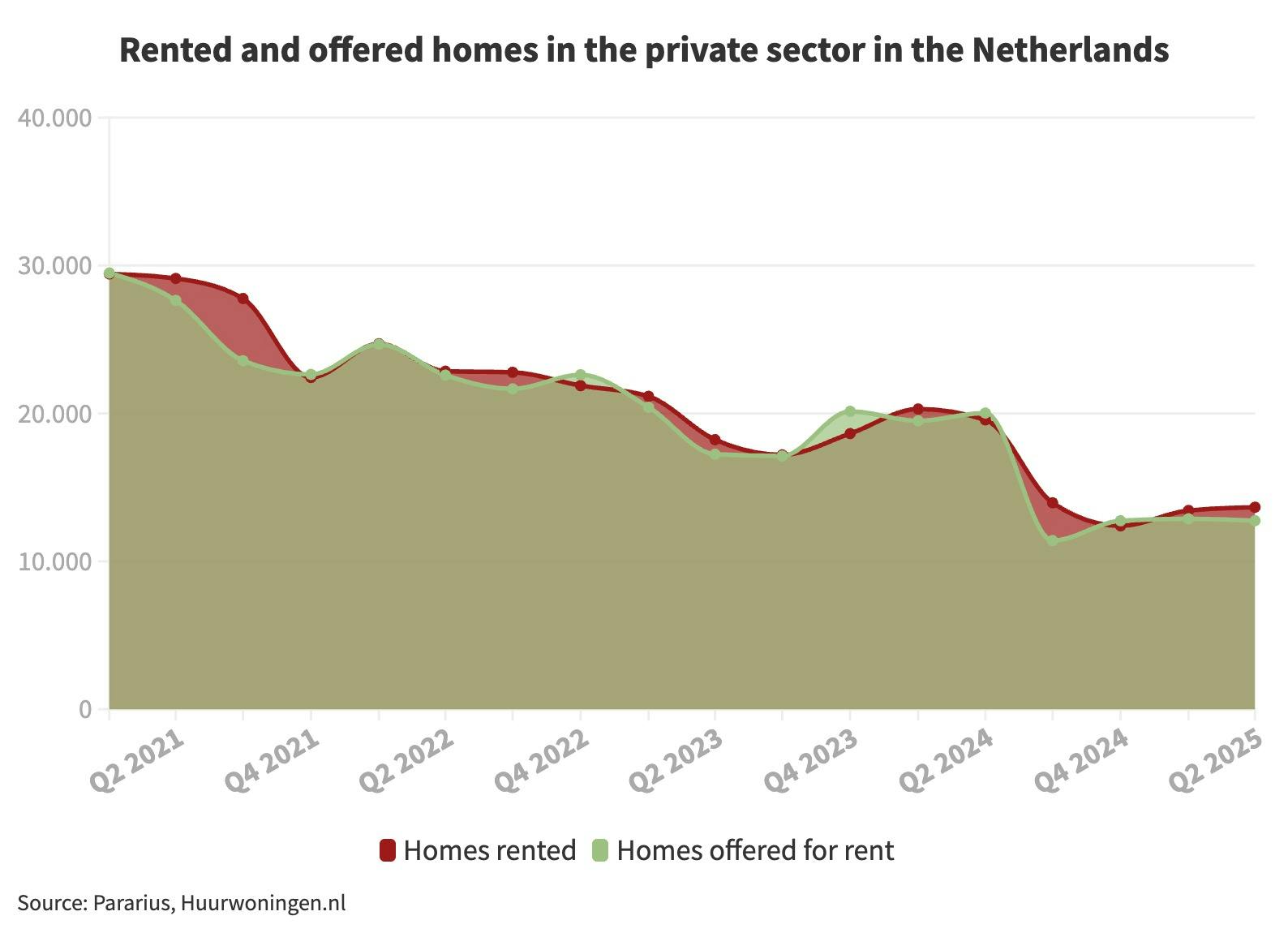
In the second quarter of 2025, only 12,744 private sector rental properties across The Netherlands became available for new tenants, a 36.4% drop compared to the same period last year. At the same time, 13,655 properties were removed from listings, representing a 30.2% decrease from Q2 2024.

The average listing duration also fell to a record low: homes were online for just 18 days before being let, the shortest time since Pararius began tracking this data.

Report of rented and offered homes in the private sector in The Netherlands

Record-High Demand Per Property

On average, each rental home received 57 responses this quarter, the highest number ever recorded by Pararius. This marks a steep rise from the 41 responses per property in Q2 of last year.

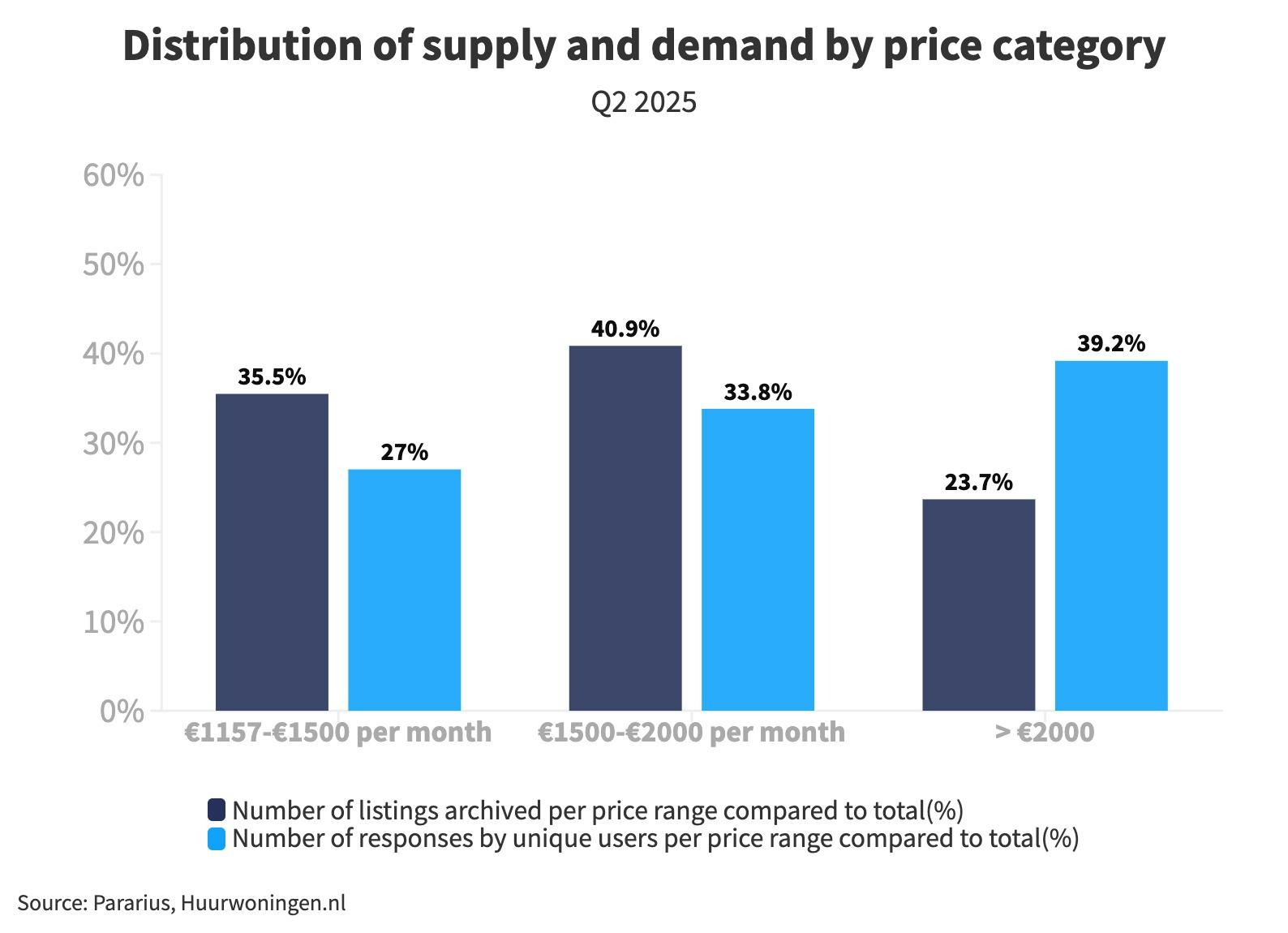
Rental properties priced between €1,185 and €1,500 per month were especially sought after. Although this price range accounted for just 27% of the total supply, it attracted 35% of all tenant enquiries.

The mid-range segment (€1,500–€2,000) is also experiencing mounting pressure. Here, 40.9% of responses targeted just 33.8% of the available listings. This growing mismatch is pushing demand further up the price scale.

Chart of distribution of supply and demand by price category

Rents Continue to Climb

The average monthly rent in the private sector rose to €1,830 in Q2 2025, up 17.4% year-on-year. To qualify, tenants now need a gross monthly income of at least €5,490, which is over €800 more than the same time last year.

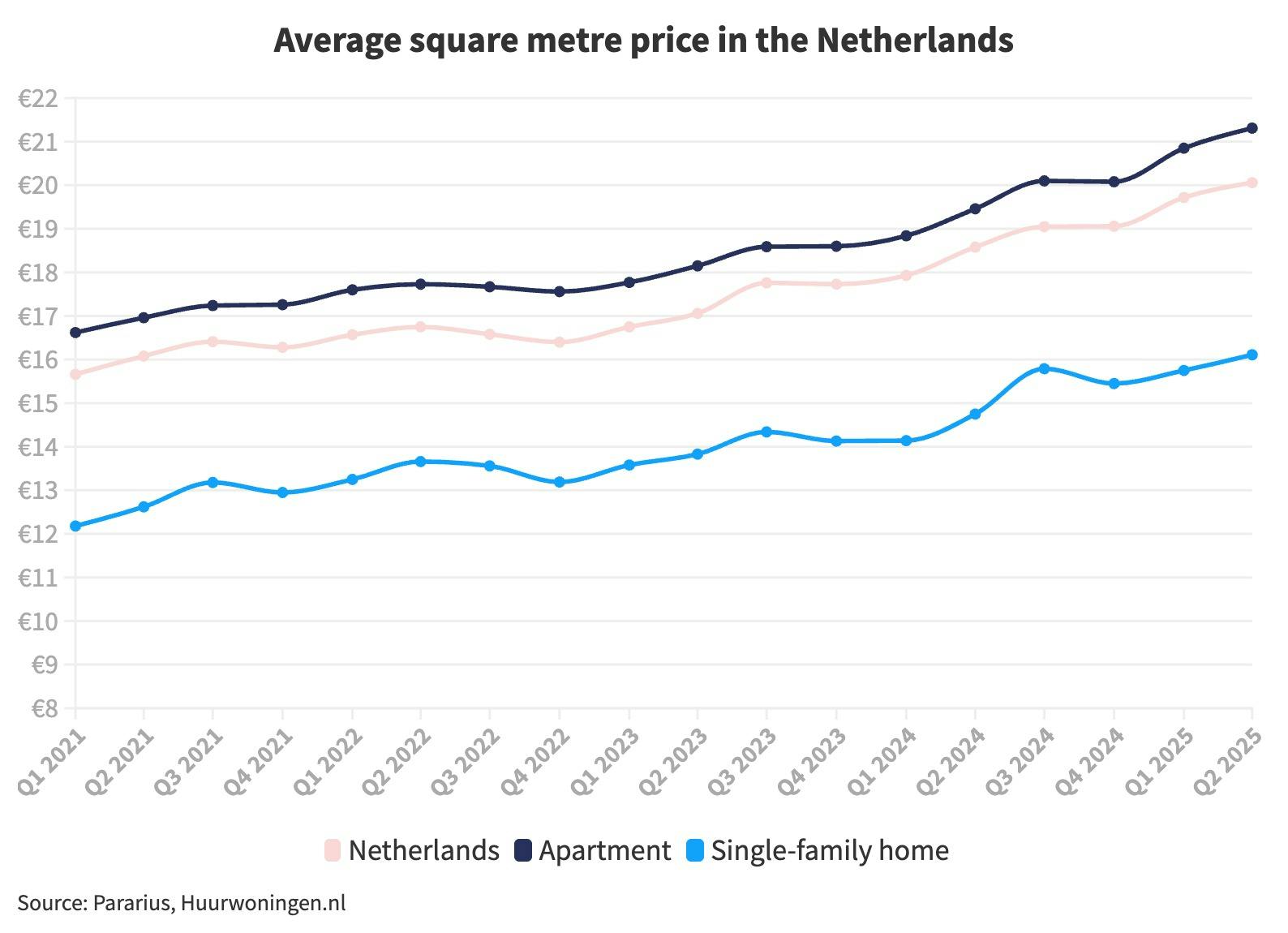
Tenants are now paying €20.06 per square metre on average, crossing the €20 threshold for the first time.

Chart of average square metre price in The Netherlands

More Landlords Selling Up

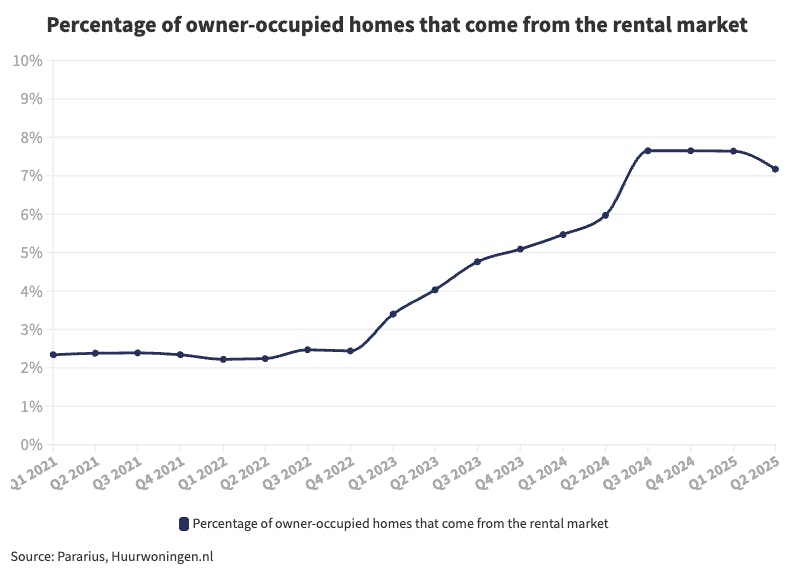
An increasing number of landlords are opting to sell their rental properties, a trend known as uitponden in Dutch. In Q2 2025, 2,112 rental properties were sold, the highest number since Pararius began tracking this trend. This shift is removing more homes from the rental market, pushing supply down further.

Chart of dutch owner occupied homes that come from the rental market

Regional Variations

Rental prices rose in nearly all cities. Among the five largest Dutch cities, the average rents per square metre were:

  • Amsterdam: €27.91 (+2.2%)
  • Rotterdam: €21.52 (+7.2%)
  • The Hague: €21.34 (+6.8%)
  • Utrecht: €21.60 (+1.2%)
  • Eindhoven: €18.38 (+4.3%)

Significant increases were also observed in cities outside the Randstad region, such as:

  • Roermond: €16.80 (+28.3%)
  • Hoorn: €20.79 (+25.4%)
  • Leeuwarden: €15.28 (+24.8%)

However, some cities saw price declines due to changes in the types of properties offered. For instance, Hoofddorp (–7.4%) and Zwolle (–7.1%) recorded price drops, largely because of an increased share of larger homes being rented, which are typically cheaper per square metre than apartments.

All Dutch provinces recorded rising rents per square metre. The largest increases were seen in:

  • Drenthe: €14.94 (+16.7%)
  • Limburg: €16.22 (+16.3%)
  • Friesland: €13.69 (+12.3%)
  • Gelderland: €15.71 (+10.6%)


The Randstad remains the most expensive region, with North Holland leading at €24.52 per square metre.

Middle-Income Households Struggling

Jasper de Groot, CEO of Pararius, explains:

“The disconnect between private sector rents and what people can realistically afford is growing quarter by quarter. As rents rise, so do the income requirements to qualify for a tenancy. We're seeing more and more people caught in the middle: earning too much for social housing, but not enough to rent in the private sector. These middle-income households are stuck.

Without a significant boost in supply, that situation is unlikely to change.
The private rental market also used to serve as a safety net for people in urgent need of temporary housing, such as divorcees or recent graduates relocating for work, but that safety net is rapidly fraying. Their housing security is now at risk.”

Looking forward

Unless urgent measures are taken to expand supply, pressure on the Dutch rental market is expected to increase in the coming quarters.

Interested in the full details? You can access the complete Q2 2025 Rental Report here.

You might also like

Studying in the Netherlands

Studying in the Netherlands is a popular choice among international students. Every year, the country attracts tens of thousands of students from around the world. This is largely due to the wide range of English-taught programs, a highly international society, and the high quality of education. In this article, we explain what you need to arrange if you plan to study in the Netherlands as an international student.

Moving with your family, the basics you should know

Relocating to a new country is always a significant life event, but when family members are moving with you, it becomes even more complex. The Netherlands continues to be one of the most attractive destinations for international professionals, thanks to its stable economy, high quality of life, and excellent infrastructure. But while the professional opportunity may be exciting, the personal aspects of the move, especially when relocating with a family, it requires extra attention and planning. In this article, we discuss the basics of what you should know about moving with your family.

Rental Report Q1 2025: Rising rents and shrinking supply put Dutch rental market under pressure

Pararius releases its Rental Report each quarter, offering insights into the trends within the Dutch private rental sector. The Q1 2025 edition highlights a further destabilisation of the rental market, driven by a sharp drop in available properties and steadily growing demand. These developments are pushing rents upward, especially in the more affordable housing segments.